

Finding the best music submission sites can be confusing because every platform promises to help artists get heard. Some focus on Spotify playlist pitching. Some connect artists with blogs and media outlets. Some are built around curator feedback. Others are better suited for full promotional campaigns.
The truth is simple: there is no single best music submission site for every artist. The right platform depends on your goal.
If you want playlist consideration, you may need a platform with a strong playlist curator network. If you want blog reviews, press coverage, or written feedback, you need a platform built around reviewers and media outlets. If you want a managed campaign, you may need a larger budget. If you want detailed critique before or after release, a feedback-first platform may be a better fit.
This guide looks at five of the best music submission sites for independent artists, labels, managers, and PR teams:
Musosoup
Music Feedback Pro
SubmitHub
Groover
Playlist Push
This list is intentionally balanced. The goal is not to say one platform is perfect. The goal is to help you understand what each site does best, where each one falls short, and which music submission platform is right for your next release.
Quick Comparison: Best Music Submission Sites
Platform | Best For | Main Focus | Pricing Style | Best Fit |
|---|---|---|---|---|
Musosoup | Press, blogs, radio, playlists, and PR-style coverage | Curators send free or paid opportunities after campaign approval | Campaign fee plus optional curator offers | Artists who want wider music promotion beyond playlisting |
Music Feedback Pro | Music feedback, reviews, critique, and media opportunities | Verified reviewers, blogs, and media outlets send offers | Flat campaign fee plus optional accepted offers | Artists who want honest feedback and credible review-led opportunities |
SubmitHub | Direct curator pitching | Playlists, blogs, influencers, and curator feedback | Free standard credits and paid premium credits | Artists who want granular control over who receives their music |
Groover | Guaranteed curator responses | Blogs, playlists, labels, radio, managers, and music pros | Credit-based submissions | Artists who want written responses from selected curators and industry contacts |
Playlist Push | Large playlist and TikTok campaigns | Spotify playlist pitching and TikTok creator promotion | Managed campaign pricing | Artists with a larger promotion budget who want campaign scale |
What Makes a Good Music Submission Site?
Before choosing where to submit your music, it helps to know what separates a useful platform from one that simply takes your money.
A good music submission site should give artists access to relevant curators, reviewers, playlist owners, media outlets, or music professionals. It should also be clear about how submissions work, what artists are paying for, and what results are realistic.
The best music submission platforms usually offer some combination of the following:
Curator access: You should be able to reach people who actively review, feature, share, or consider new music.
Clear pricing: Artists should understand whether they are paying per submission, per campaign, or per accepted offer.
Relevant targeting: The platform should help you reach curators who match your genre, sound, story, or release goal.
Feedback or transparency: Even if your song is declined, useful feedback or clear campaign data can help you improve.
No fake promises: A serious platform should not guarantee streams, viral success, playlist placements, or press coverage without context.
Artist control: You should be able to decide which opportunities are worth accepting.
With that in mind, here are five of the best music submission sites worth considering.
1. Musosoup
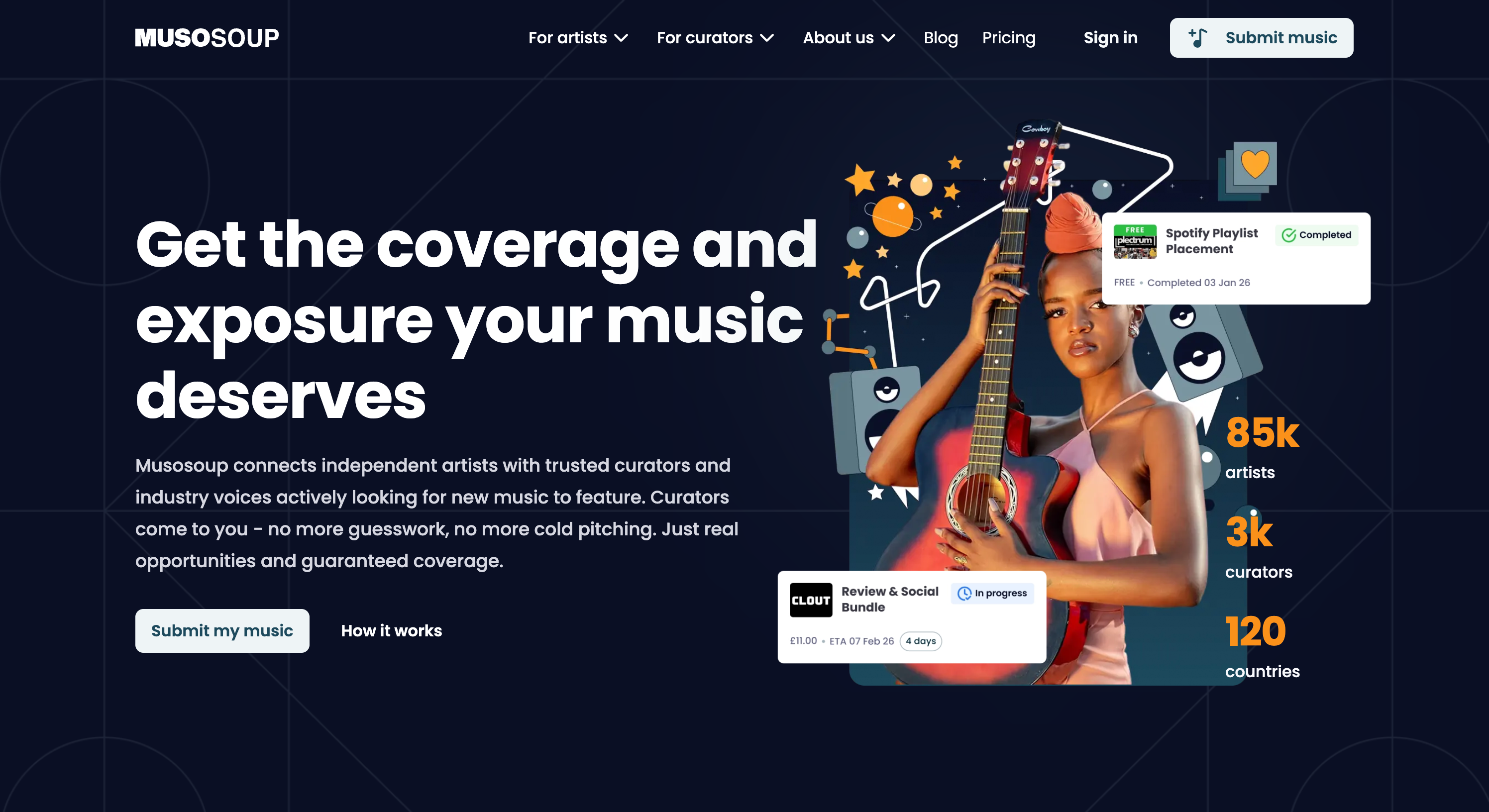
Musosoup is a music promotion platform built around curator-led opportunities. Instead of artists manually pitching every single blog, playlist, radio station, or media outlet, artists submit their music to Musosoup, and curators can come forward with coverage opportunities.
Musosoup is especially useful for artists who want a wider mix of promotion. It is not only about Spotify playlists. It can include blogs, reviews, interviews, radio, social media opportunities, and other forms of music coverage.
How Musosoup Works
Artists submit their release to Musosoup for review. If the submission is accepted, the artist can activate a campaign. From there, curators and media outlets can send offers for coverage. These offers may be free or paid, depending on the curator and the type of opportunity.
This makes Musosoup different from platforms where the artist has to choose and pay for each curator upfront. Musosoup gives artists access to a campaign environment where opportunities can come in after the release has been approved.
Musosoup Pricing
Musosoup says that starting a campaign costs from £42 after the submission has been accepted. The platform also states that paid promotions are usually set by curators individually, with average paid promotion prices often ranging around £8 to £12. Artists can choose which offers they want to accept.
Best Features
Access to blogs, playlists, radio, media outlets, and influencers
Curators can come to the artist with opportunities
Free and paid coverage options may be available
Useful for pre-release and release campaigns
Good fit for artists who want press-style coverage, not only playlists
Pros
Strong option for artists who want a broader campaign
Can help artists generate blog coverage, interviews, reviews, and playlist opportunities
More flexible than hiring a traditional PR agency
Artists stay in control of which offers they accept
Good for independent artists who want campaign visibility without managing every pitch manually
Cons
The campaign fee is only the starting point, so total spend can increase if you accept paid offers
Not every artist will receive the same level of interest
Artists still need to review offers carefully to decide what is worth paying for
It may not be ideal if you only want private feedback or detailed critique
Who Should Use Musosoup?
Musosoup is best for artists who want a campaign that can generate different types of exposure. If your goal is to get in front of blogs, radio shows, playlist curators, and media outlets from one place, Musosoup is one of the strongest music submission sites to consider.
It is particularly useful for artists who already have a strong release package, including a good press photo, clear artist bio, professional artwork, and a story that media outlets can work with.
Verdict
Musosoup is one of the best music submission sites for artists who want more than playlist pitching. It works well for broader music promotion, especially when you want blog features, reviews, radio opportunities, and curator-led offers. The main thing to watch is your budget, because accepting multiple paid offers can quickly increase the overall campaign cost.
2. Music Feedback Pro
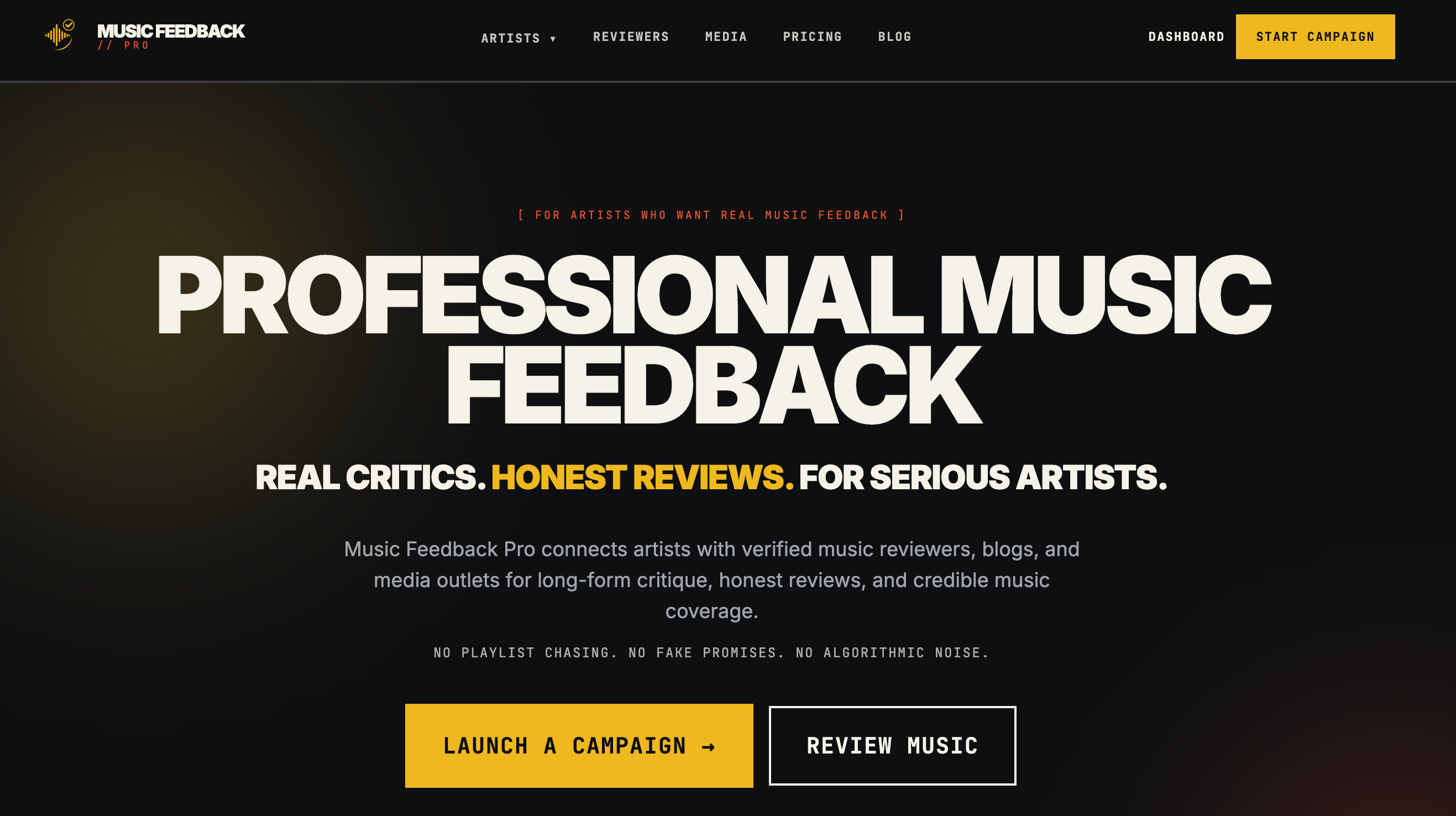
Music Feedback Pro is a music submission platform focused on honest feedback, reviews, critique, and credible media opportunities. It is designed for artists, labels, managers, and PR teams who want real responses from verified reviewers, music blogs, and media outlets.
Unlike many music promotion platforms, Music Feedback Pro does not focus on playlist placements. Its position is clear: no playlist chasing, no fake promises, and no algorithmic noise. The platform is built around human feedback, music critique, written reviews, blog coverage, and media-led opportunities.
How Music Feedback Pro Works
Artists create a campaign for their single, EP, album, or music video. They add release details, artist information, artwork, links, goals, and other useful context. Before the campaign goes live, Music Feedback Pro reviews the campaign to make sure reviewers and media outlets have the right information.
Once approved, the campaign becomes available to verified reviewers, bloggers, and media outlets. Interested curators can send offers based on the artist’s music, genre, story, and campaign brief. The artist can then choose which offers to accept.
Offers may include private critique, public music reviews, blog coverage, media features, interviews, video reviews, or social sharing opportunities.
Music Feedback Pro Pricing
Music Feedback Pro is free to submit. The £15 launch fee is only charged once your campaign is approved by the team. Each campaign runs for 30 days. Artists can submit unreleased music up to 30 days before release, or they can create a campaign for music that is already out.
The platform also only charges the £15 launch fee after your campaign is approved by the team — if the team cannot approve your submission, you are not charged.
Best Features
Free to submit — £15 launch fee only after approval
30-day campaign window
Campaigns are reviewed before going live
Verified reviewers, blogs, and media outlets
Private critique or public review opportunities
Supports singles, EPs, albums, and music videos
Artists stay in control of which offers they accept
Only charged after team approval
No playlist placements or fake stream promises
Pros
Clear focus on feedback, critique, reviews, and media coverage
Good fit for artists who want to understand how their music is being received
Useful for pre-release feedback and post-release review campaigns
Strong alternative for artists who are tired of playlist-only platforms
Simple pricing compared with credit-based submission systems
Helpful for artists building press quotes, review assets, and credibility
Cons
Not suitable for artists who mainly want Spotify playlist placements
Newer than established platforms like SubmitHub, Groover, and Playlist Push
Results depend on the quality of the campaign, song, genre fit, and curator interest
Artists may still need to pay for accepted curator or media offers depending on the opportunity
Who Should Use Music Feedback Pro?
Music Feedback Pro is best for artists who want more than exposure. It is for artists who want to learn how reviewers, writers, bloggers, and media outlets respond to their music.
It is especially useful if you are asking questions like:
Is my song ready for release?
How are real reviewers responding to my sound?
Can I get thoughtful critique from people outside my inner circle?
Can I build credible review quotes for my artist profile?
Can I connect with blogs and media outlets without chasing random emails?
If your main goal is playlist growth, Music Feedback Pro is not the right platform. But if your goal is review-led discovery, honest music feedback, and stronger media positioning, it is one of the most focused platforms on this list.
Verdict
Music Feedback Pro is one of the best music submission sites for artists who care about feedback, reviews, critique, and credible coverage. It does not try to compete as a playlist pitching tool. That focus is actually its strength. For artists who want meaningful responses from reviewers and media outlets, Music Feedback Pro fills an important gap in the music submission space.
3. SubmitHub
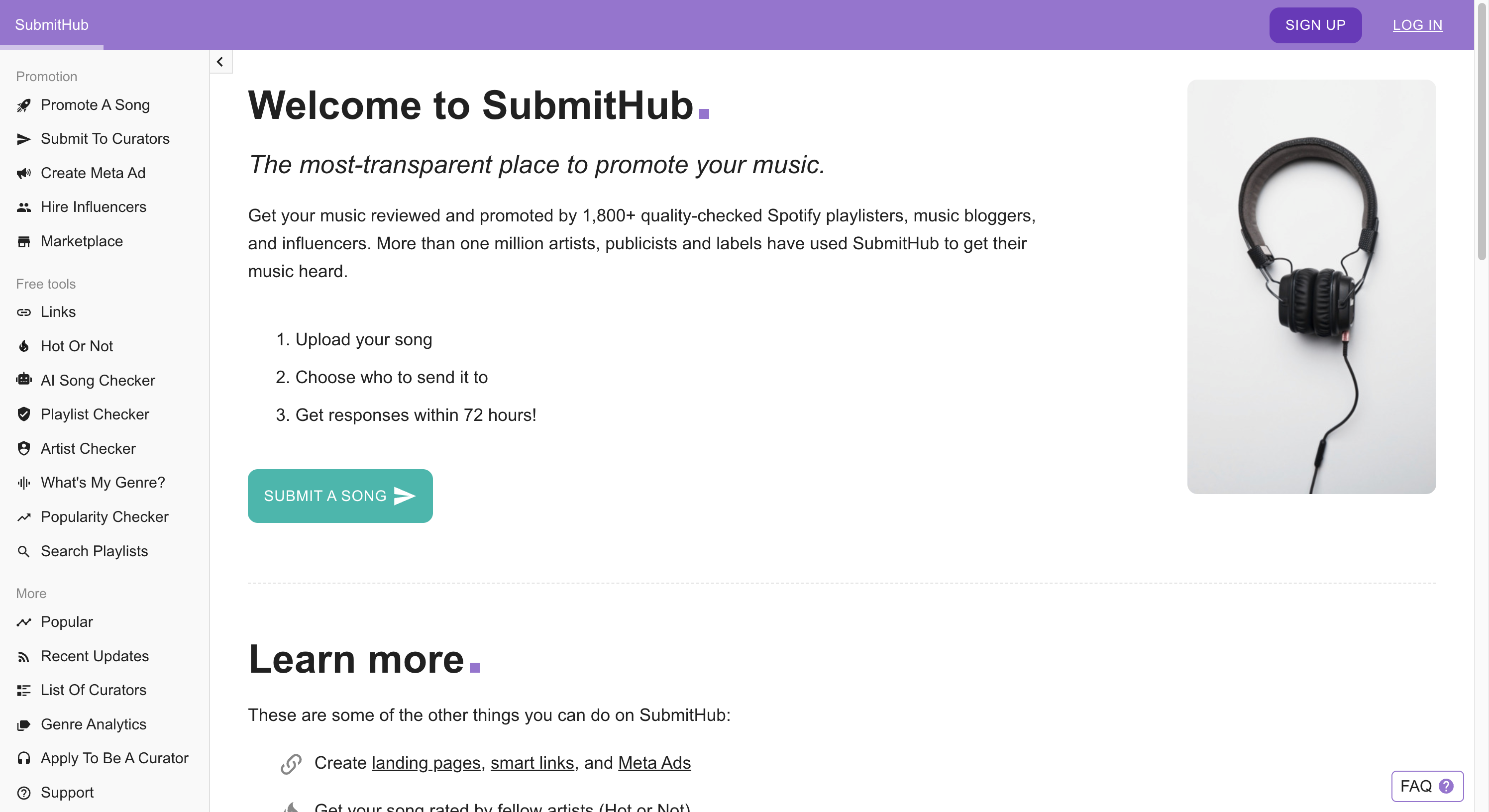
SubmitHub is one of the most well-known music submission sites in the independent music industry. It connects artists with playlist curators, blogs, influencers, labels, and other music tastemakers.
SubmitHub is popular because it gives artists a high level of control. You can search for curators by genre, platform, approval rate, feedback style, and other useful filters. This makes it one of the most transparent platforms for direct music pitching.
How SubmitHub Works
Artists submit songs directly to selected curators using credits. There are free standard credits and paid premium credits. Premium submissions usually give curators clearer obligations, such as listening to the track and responding within a defined time window.
Curators can approve, decline, share, or provide feedback depending on the submission type and their own editorial preferences.
SubmitHub Pricing
SubmitHub has a freemium model. Artists can use free standard credits, but many serious campaigns use paid premium credits for better response rules and stronger curator engagement.
The exact cost depends on the curators you choose and the number of credits required for each submission.
Best Features
Large curator marketplace
Playlist, blog, influencer, and label pitching
Free and paid submission options
Curator profiles and filtering tools
Approval and engagement data
Useful for testing different curator groups
Pros
One of the most established music submission platforms
Good transparency compared with many promotion services
Artists can choose exactly who they want to pitch
Works for small budgets
Useful for both playlist pitching and blog submissions
Cons
Highly competitive
Approval rates can be low depending on genre and song quality
Feedback can be short or mixed in usefulness
Artists need to spend time researching the right curators
Easy to waste credits if targeting is poor
Who Should Use SubmitHub?
SubmitHub is best for artists who want control over who receives their music. If you are comfortable researching curators, reading profiles, checking approval rates, and testing your targeting, SubmitHub can be very useful.
It is also a good choice for artists with smaller budgets who want to start with free or low-cost submissions before scaling up.
Verdict
SubmitHub remains one of the best music submission sites because of its size, transparency, and flexible credit system. It is not a guaranteed placement machine, and artists should not treat it like one. But when used carefully, it can be a valuable tool for playlist pitching, blog outreach, and curator feedback.
4. Groover
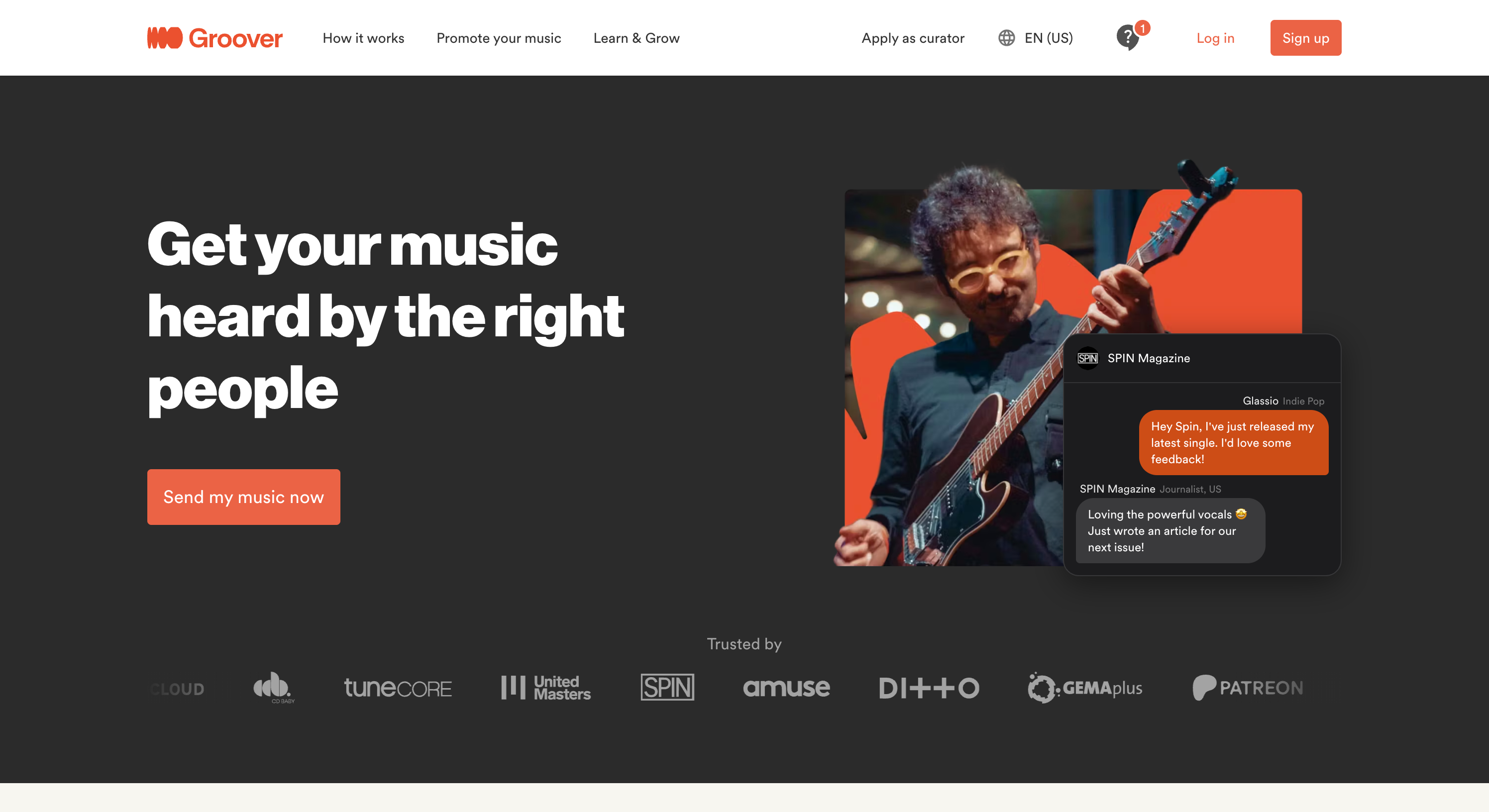
Groover is a music promotion platform that connects artists with curators, blogs, labels, playlist owners, radio stations, managers, and other music professionals. Its strongest selling point is guaranteed feedback: if a selected contact does not respond within the required time, the artist gets credits back.
Groover is especially popular among independent artists who want written responses from music professionals instead of sending music into a black hole.
How Groover Works
Artists choose curators or pros they want to contact, submit their music with a short pitch, and wait for feedback or potential opportunities. Groover allows artists to browse thousands of curators, labels, blogs, and other music contacts.
The platform can be used for playlist pitching, blog outreach, radio opportunities, label discovery, and general industry feedback.
Groover Pricing
Groover uses a credit system called Grooviz. A standard contact typically starts at 2 Grooviz, with some higher-tier curators or pros costing more. Artists buy Grooviz and use them to contact selected curators or industry professionals.
Best Features
Access to thousands of curators and music professionals
Guaranteed response system
Useful for playlists, blogs, radio, labels, and managers
Artists choose who receives their music
Good option for international music outreach
Pros
Strong feedback system compared with many submission platforms
Broad network beyond playlist curators
Useful for artists who want industry responses
Good interface for choosing relevant contacts
Can support different goals, including press, playlists, label interest, and radio
Cons
Paid-only structure can add up quickly
Top-tier contacts may cost more
Feedback quality can vary by curator
A response does not guarantee coverage or placement
Artists still need to choose contacts carefully to avoid wasting credits
Who Should Use Groover?
Groover is best for artists who want feedback and access to a wide range of music professionals. It works well if you are not only looking for playlists, but also want to reach blogs, labels, radio stations, managers, and tastemakers.
It is also useful for artists who value a guaranteed response more than the chance of a silent rejection.
Verdict
Groover is one of the best music submission sites for artists who want structured outreach and written feedback from curators and music professionals. It is not the cheapest option if you contact many people, but it offers a strong balance of access, feedback, and opportunity.
5. Playlist Push
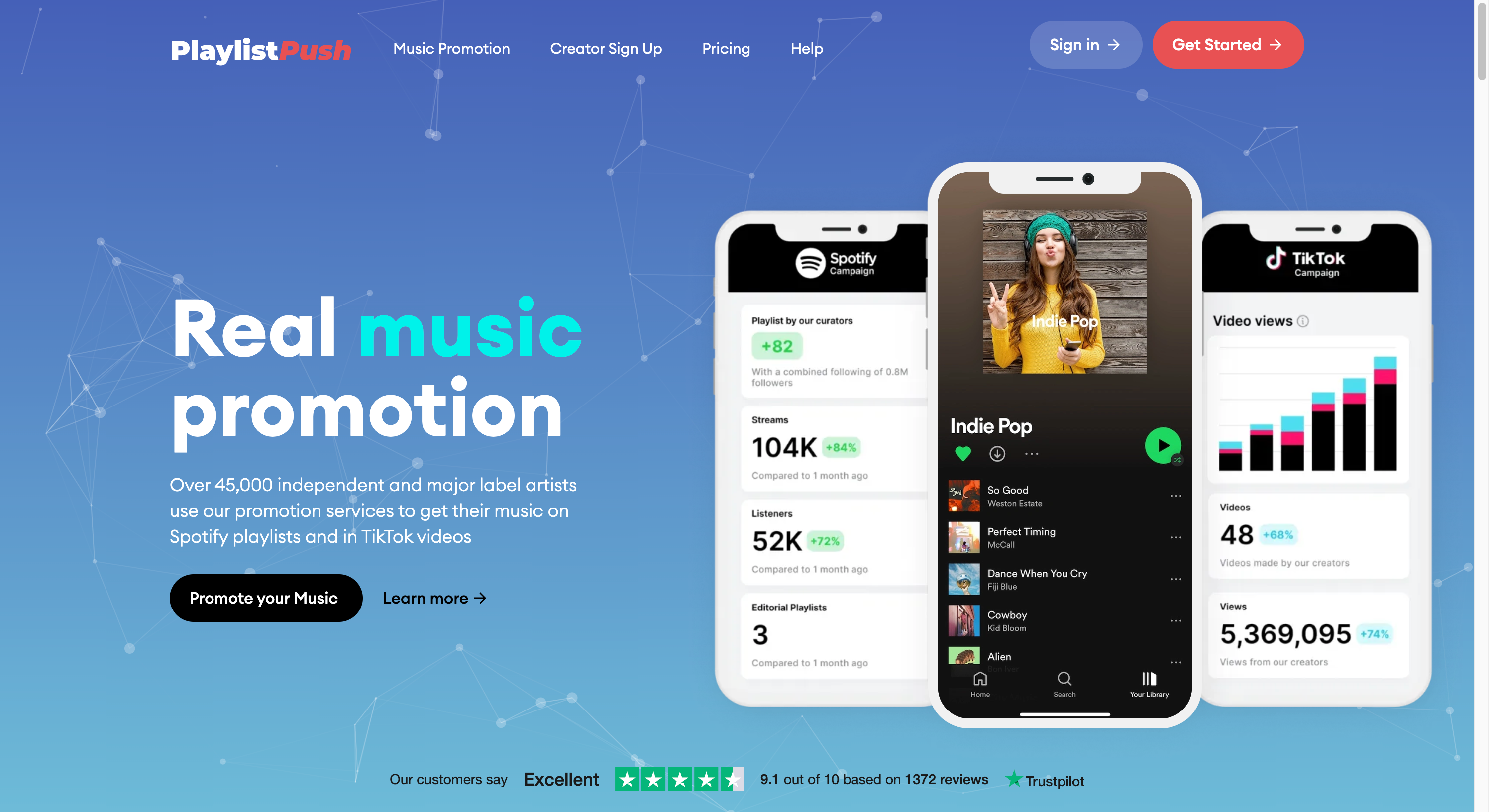
Playlist Push is a music promotion platform focused mainly on Spotify playlist campaigns and TikTok creator campaigns. It is more of a managed campaign service than a low-cost direct submission marketplace.
Playlist Push is best known for connecting artists with vetted playlist curators and creators. It is designed for artists who want a larger campaign and are prepared to spend more than they would on platforms like SubmitHub or Groover.
How Playlist Push Works
Artists apply for a campaign, choose a budget, and Playlist Push matches the song with relevant playlist curators or TikTok creators. The platform manages the campaign process and provides reporting.
For Spotify campaigns, playlist curators review songs and decide whether the music fits their playlists. For TikTok campaigns, creators may use the song in content if it fits their style and audience.
Playlist Push Pricing
Playlist Push states that Spotify campaigns start at $285 and can go above $1,000, with an average Spotify campaign cost around $450. TikTok campaigns have a separate minimum campaign cost.
This makes Playlist Push one of the more expensive platforms on this list.
Best Features
Large playlist curator network
Spotify playlist campaigns
TikTok creator campaign options
Managed campaign process
Campaign reporting and analytics
Better suited for artists with a defined promotion budget
Pros
Good for larger playlist pitching campaigns
Less manual work compared with choosing curators one by one
Useful reporting for campaign performance
Can help artists reach playlist networks at scale
Also supports TikTok-focused promotion
Cons
Much more expensive than many alternatives
No campaign can guarantee playlist adds, streams, or long-term fan growth
Not focused on blog reviews or written critique
Less suitable for artists with small budgets
Best results depend heavily on song quality, genre fit, and curator interest
Who Should Use Playlist Push?
Playlist Push is best for artists, managers, and labels with a bigger campaign budget who want a managed playlist or TikTok promotion campaign. It is not the first platform most new artists should use if they are still testing their sound, building press assets, or looking for detailed feedback.
However, if you already have a strong release, a clear target audience, and a budget for wider promotion, Playlist Push can be a serious option.
Verdict
Playlist Push is one of the best music submission sites for artists who want scale, especially for Spotify playlist pitching and TikTok promotion. It is not the cheapest or most feedback-focused option, but it can be useful for artists who are ready to invest in a larger campaign.
Which Music Submission Site Should You Choose?
The best music submission site depends on what you want from your campaign.
Your Goal | Best Platform to Consider |
|---|---|
I want blogs, radio, playlists, and PR-style opportunities | Musosoup |
I want honest feedback, critique, reviews, and media coverage | Music Feedback Pro |
I want to pitch directly to specific curators | SubmitHub |
I want guaranteed curator responses from blogs, labels, playlists, and pros | Groover |
I want a larger managed Spotify or TikTok campaign | Playlist Push |
For many artists, the smartest approach is not to use only one platform. A release campaign may include multiple submission routes depending on the goal.
For example, an artist could use Spotify for Artists for official editorial playlist pitching, Music Feedback Pro for review-led feedback and media opportunities, SubmitHub or Groover for targeted curator outreach, and Musosoup for broader press and PR-style opportunities.
The key is to avoid treating every submission site as if it does the same job.
Tips Before Submitting Your Music
Before you spend money on any music submission site, make sure your release is ready. Even the best platform cannot fix a weak pitch, poor targeting, or unfinished branding.
1. Choose the right song
Do not submit every song just because you can. Choose the strongest track, the one with the clearest identity, best production, and strongest reason for coverage.
2. Match the platform to your goal
If you want playlist pitching, use a playlist-focused tool. If you want written critique, use a feedback-focused platform. If you want blogs and media, use a platform that gives access to reviewers and publications.
3. Prepare your assets
Most curators and reviewers need more than a streaming link. Prepare your artist bio, release description, artwork, press photos, social links, genre tags, and a short story behind the track.
4. Be honest about your budget
Some platforms start cheap but become expensive when you scale submissions. Set a budget before you start, then decide how much you are willing to spend on testing, feedback, coverage, or promotion.
5. Do not expect guaranteed results
A legitimate music submission site can help you reach curators, reviewers, and media outlets. It cannot force people to like your song, share your track, publish a review, or add you to a playlist.
6. Track what works
Keep a record of which platforms, genres, pitches, and curators perform best for your music. Over time, this helps you build a smarter release strategy.
Final Verdict: The Best Music Submission Sites
The best music submission sites are not all built for the same purpose.
Musosoup is a strong choice for artists who want press, blogs, radio, playlists, and broader campaign opportunities.
Music Feedback Pro is best for artists who want honest feedback, detailed critique, review-led discovery, and credible media opportunities without playlist promises.
SubmitHub is one of the most established platforms for direct curator pitching, especially if you want control over where your song goes.
Groover is ideal for artists who want guaranteed responses from curators, blogs, labels, radio stations, playlist owners, and music professionals.
Playlist Push is best for artists with a larger budget who want a managed Spotify playlist or TikTok campaign.
The smartest choice depends on your release goal. If you only chase playlists, you may miss out on the feedback and coverage that helps you grow as an artist. If you only chase reviews, you may miss wider exposure opportunities. The best strategy is to understand what each platform does well, then use the right tool for the right stage of your campaign.
Frequently Asked Questions
What are music submission sites?
Music submission sites are platforms that help artists send their songs to curators, reviewers, blogs, playlist owners, radio stations, media outlets, labels, or music professionals. They can be used for feedback, reviews, playlist pitching, press coverage, radio outreach, or broader music promotion.
What is the best music submission site?
The best music submission site depends on your goal. Musosoup is strong for PR-style opportunities, Music Feedback Pro is best for feedback and reviews, SubmitHub is strong for direct curator pitching, Groover is useful for guaranteed responses, and Playlist Push is best for larger playlist or TikTok campaigns.
Are music submission sites worth it?
Music submission sites can be worth it if you use them with realistic expectations. They help you reach relevant curators and reviewers more efficiently, but they do not guarantee success. Your results depend on song quality, targeting, pitch quality, genre fit, and campaign timing.
Can I submit unreleased music?
Yes, many music submission sites allow unreleased music. In fact, pre-release submissions can be useful because blogs, reviewers, and curators often need time to listen, respond, and plan coverage.
Can music submission sites guarantee playlist placements?
No legitimate platform should guarantee playlist placements, streams, or viral growth. Curators should have the freedom to accept or decline music based on quality, fit, and editorial taste.
Which music submission site is best for feedback?
Music Feedback Pro and Groover are two strong options for feedback. Music Feedback Pro is more focused on long-form critique, reviews, and media opportunities, while Groover provides curator responses across a wider mix of music professionals.
Which music submission site is best for playlists?
SubmitHub, Groover, Musosoup, and Playlist Push can all support playlist-related outreach in different ways. Playlist Push is more campaign-based and higher budget, while SubmitHub and Groover allow more direct curator selection.
Which music submission site is best for music reviews?
Music Feedback Pro is built specifically around reviews, critique, and media opportunities. Musosoup can also be useful for review and blog coverage, especially when artists want broader PR-style exposure.