
Six realistic routes exist for making money from a music blog without surrendering your editorial voice: curator fees through a vetted submissions platform, affiliate income from music gear and software, display advertising, sponsored posts and brand partnerships, digital products and paid newsletters, and consulting or freelance writing. Each one is honest, scalable, and compatible with genuine music criticism - as long as you disclose clearly and build the right mix for where your audience is right now.
Why Music Blog Income Requires a Different Approach
General blogging guides treat monetization as a traffic problem. Get enough visitors, add ads, collect revenue. Music blog income doesn't work that way - at least not cleanly - because the thing your readers are paying attention to is your opinion. Compromise that, and you don't just lose a revenue stream. You lose the blog.
A fashion blogger who takes a sponsored post rarely destabilizes their relationship with readers. A music blogger who starts endorsing every release they've been paid to cover destroys the only thing that brought readers in: an honest ear. The trust challenge isn't cosmetic. It's structural.
The good news is that most income routes for music blogs don't require you to endorse anything at all. Affiliate links, display ads, consulting, and paid newsletters all generate music blog income without your review score going on sale. Even curator fees - properly structured - carry no obligation to praise.
The Disclosure Rule That Keeps Everything Else Working
Disclose every commercial relationship, every time, at the top of the piece. The labels are simple: "Supported Feature," "Paid Placement," or "Sponsored Post" all work. Readers don't resent transparency. They resent discovering it after the fact.
Label it clearly: "Supported Feature," "Paid Placement," or "Sponsored Post" - and your readers will respect it.
Why No Single Stream Is Enough
No single income route is sufficient for most music blogs, particularly at launch. The goal is to combine routes so that a slow month on one front doesn't collapse your earnings entirely. Here's how the six routes compare:
| Route | Effort Level | Realistic Monthly Income Range | Requires Large Audience? |
|---|---|---|---|
| 1. Curator fees (vetted submissions platform) | Low | Varies by negotiated fee; starts from first review | No |
| 2. Affiliate income (music gear/software) | Low-Medium | £10-£200+ depending on traffic and conversion | No, but traffic helps |
| 3. Display advertising | Low (setup) | Under £50 at under 5,000 monthly sessions | Yes |
| 4. Sponsored posts and brand partnerships | Medium-High | £50-£500+ per post depending on reach | Moderate audience needed |
| 5. Digital products and paid newsletters | Medium | £50-£300+ MRR at modest subscriber counts | No |
| 6. Consulting and freelance writing | High (sales effort) | £200-£1,000+ per project | No - expertise matters more |
Route 1 - Curator Fees Through a Vetted Submissions Platform
This is the route that general blogging guides consistently overlook, and it's the most realistic starting point for a music blogger at any traffic level.
How Curator Fees Actually Work
A curator fee is the payment a music blogger receives for reviewing a track submitted by an artist through a vetted submissions platform. The mechanics: an artist pays a flat campaign fee to the platform, curators browse open campaigns and send proposals, and when an artist accepts a proposal, the agreed fee goes into escrow. On delivery of the review, the escrow releases payment to the curator.
This structure is central to how Music Feedback Pro operates. Fees are negotiated directly between curator and artist, which means bloggers retain full control over what they accept and at what rate.
Why This Is the Most Transparent Route for Music Bloggers
The escrow model is what separates curator fees from old-fashioned pay-to-play schemes. Payment is contingent on delivering the review - not on delivering a positive one. The curator is never obligated to praise. If a track doesn't meet your editorial standard, you decline the campaign at the proposal stage. If you accept and the review is negative, the escrow still releases. Your honesty is protected by design, not by goodwill.
This aligns payment with editorial delivery rather than editorial outcome - the exact structure that makes paid blog features compatible with genuine music criticism.
Music Feedback Pro insight: Fees are negotiated directly between curator and artist - giving bloggers full control over what they accept and for how much.
What You Need to Get Started
You need an active music blog, a consistent editorial voice, and an application to a vetted platform. Music Feedback Pro accepts curator applications from bloggers who can demonstrate genuine coverage. See how to earn fees as a verified curator to apply directly. For the step-by-step payment workflow, the guide on how to get paid to review music online covers the full process. You can also explore Music Feedback Pro's submissions platform for music blogs to understand how campaigns reach curators.
Always disclose. A line at the top of the post - "This review was submitted via Music Feedback Pro. The fee was held in escrow and released on delivery. All opinions are my own." - is all it takes.
Route 2 - Music Blog Affiliate Income from Gear and Software
Affiliate marketing earns a commission when a reader clicks your link and buys something. For a music blog, the affiliate categories are far better matched to your audience than anything a lifestyle or general interest blogger encounters.
How Music Blog Affiliate Marketing Works
Sign up for an affiliate programme, embed tracked links naturally within your content, and earn a percentage of each qualifying sale. Tracking is cookie-based, so sales made days or weeks after a click can still be attributed to your link.
The Right Affiliate Categories for Music Blogs
Music gear retailers are a natural fit. Thomann, Europe's largest instrument retailer, runs a music blog affiliate programme suitable for blogs that review or reference specific gear. Gear4Music operates a comparable programme in the UK. Plugin and software marketplaces are equally relevant - Plugin Boutique offers an affiliate scheme covering VST instruments and effects that integrates naturally into production-focused reviews. Music learning platforms and recording software companies often run their own referral programmes worth approaching directly.
Commission rates for named third-party programmes vary and change frequently, so verify directly with each programme before publishing any rate claims. What matters is that music gear carries higher average order values than most consumer niches. Per-click earnings can outperform general content affiliate programmes even at modest traffic levels.
What and How to Disclose
Add a brief affiliate disclosure at the top of any post containing affiliate links: "This post contains affiliate links. If you buy through these links, I may earn a commission at no extra cost to you." Keep it above the fold, not buried at the bottom.
Realistic Expectations at Low Traffic
Affiliate income below 1,000 monthly readers is low but not zero. A single well-placed gear recommendation in a high-intent review can convert. The channel also grows disproportionately as your content library expands - older reviews keep earning long after publication.
Affiliate links vs. display ads: which earns more per visitor at low traffic?
| Metric | Affiliate Links | Display Ads |
|---|---|---|
| Income per 1,000 visitors | Higher (one conversion can outperform months of ad RPM) | Lower (RPM at small traffic volumes is typically £1-£5) |
| Setup complexity | Medium (programme applications, link placement) | Low (one-time ad code install) |
| Best for | Review content with purchase intent | High-volume traffic with broad audience |
| Works at under 1,000 readers/month? | Yes | Rarely worthwhile |
Route 3 - Display Advertising: What Music Blogs Actually Earn
Display advertising is the most familiar monetization route, and also the most misunderstood at music-blog scale.
How Display Ads Work
Install ad code from a network - Google AdSense is the standard entry point - and the network serves ads automatically to your visitors. You earn based on impressions and clicks.
The RPM Reality Check
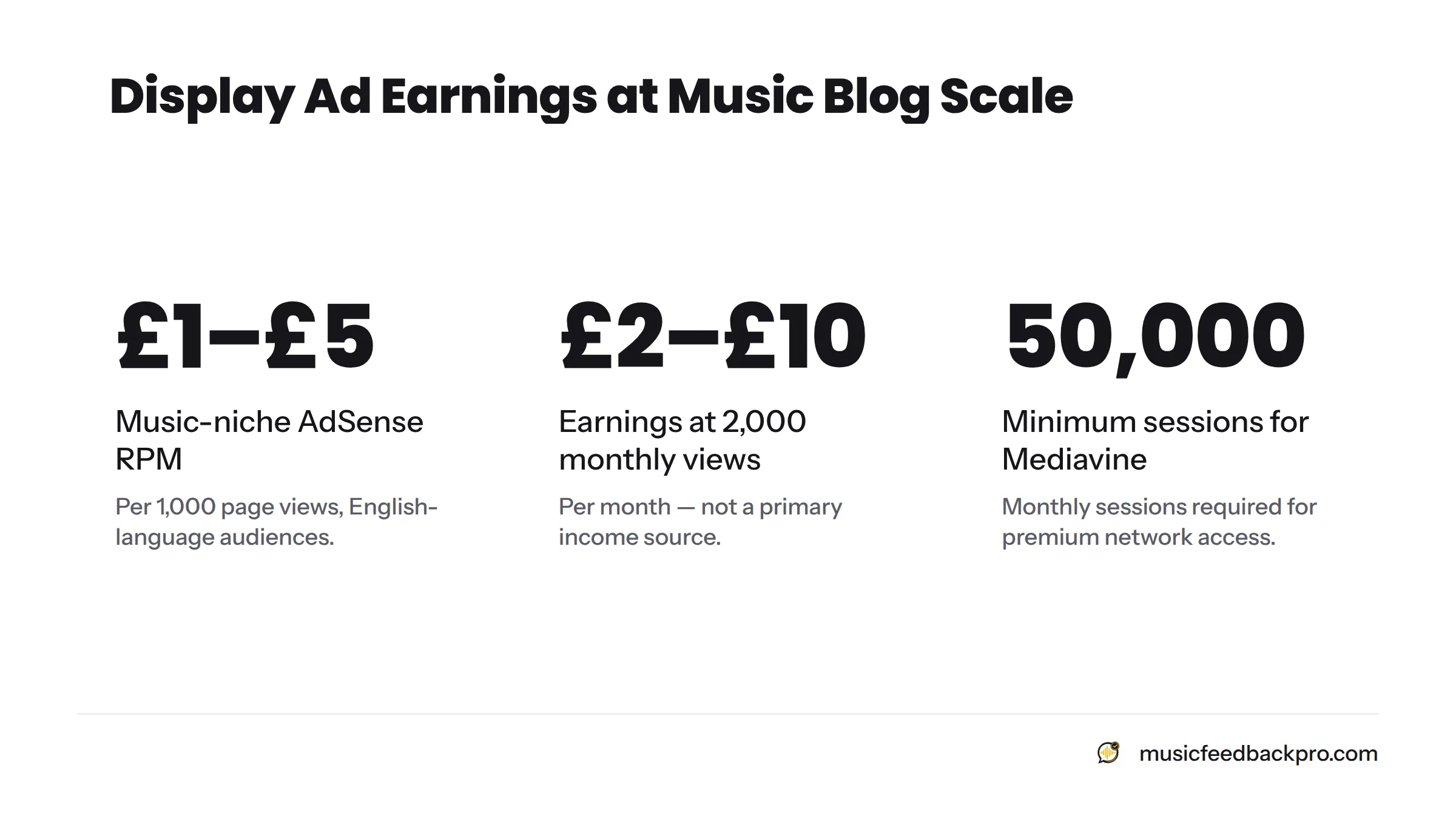
RPM (revenue per thousand impressions) is the standard measure of display ad earnings per 1,000 page views. Music content generally sits in a lower RPM bracket than finance or legal content because the advertiser pool is smaller. Independent estimates from publishers place music-niche AdSense RPM in the £1-£5 range for English-language audiences, varying by geography, time of year, and ad placement. At 2,000 monthly page views, that's roughly £2-£10 per month - not a primary income source.
Premium networks like Mediavine require a minimum of 50,000 monthly sessions, which puts them out of reach for most emerging music blogs.
When Display Ads Are Worth Adding
Display ads start contributing meaningfully when you consistently reach 10,000 or more monthly sessions. Below that threshold, the income rarely justifies the user experience cost of cluttered pages. Heavy ad loads drive readers away. If ads are pushing your content below the fold or reducing time-on-page, you're trading long-term authority for short-term pennies.
Display ads work best as a supplement to other routes - not your primary income source - especially at the traffic levels most music blogs start at.
Route 4 - Sponsored Music Posts and Brand Partnerships
A sponsored post is content - a review, a list, a feature - that a brand has paid to have published on your blog. Done transparently, it's entirely ethical. Done covertly, it's both illegal and credibility-destroying.
What a Sponsored Music Post Looks Like in Practice
A music education company might pay you to write a "Best DAWs for Beginners" post featuring their product. A ticketing platform might commission a live events preview. The content can be genuinely useful - the commercial relationship doesn't corrupt the editorial product, provided it's clearly labelled.
How to Build a Music Blog Media Kit
A media kit is the document you send to potential sponsors. It answers everything a brand needs to decide whether your blog is worth paying for. Music blogs should include:
- Monthly unique readers and page views (last 3-6 months)
- Email list size (if applicable)
- Social media follower counts across relevant platforms
- Audience demographics (age range, geography, genre interests)
- Genre and editorial focus - "indie rock and electronic" outperforms "music"
- Three example posts that show your best work
- Rate card (per sponsored post, per newsletter mention, per social share)
- Contact details and response time commitment
For more on building press assets that strengthen both reader and sponsor confidence, see Music Blog Features: Build Press Assets That Last.
Who Sponsors Music Blogs
Music gear brands, recording software companies, streaming services, music education providers, ticketing companies, and instrument manufacturers are the most active sponsors in this space. They want access to a specific, engaged audience - which a niche music blog often delivers more precisely than a mass-media outlet.
Disclosure, the FTC, and the ASA
In the United States, the FTC's endorsement guidelines require clear disclosure of any material connection between you and a brand, including payment, free products, or affiliate relationships. In the UK, the ASA CAP Code applies the same principle to online content. Disclosure must be upfront, prominent, and unambiguous - not buried in a footer. This isn't a style preference; it's a legal obligation in both markets. Consult a qualified legal professional for advice specific to your situation.
Your First Sponsored Deal
Start by reaching out to brands whose products you already reference organically. Show them your media kit, name a rate, and be prepared to negotiate. Your first deal will teach you more than any guide can.
Route 5 - Digital Products and Paid Newsletters
Selling your knowledge directly carries the highest margin and the lowest dependency on platform algorithms. I'd argue it's also the most creatively satisfying route for writers who've built genuine expertise.
What Music Bloggers Can Actually Sell
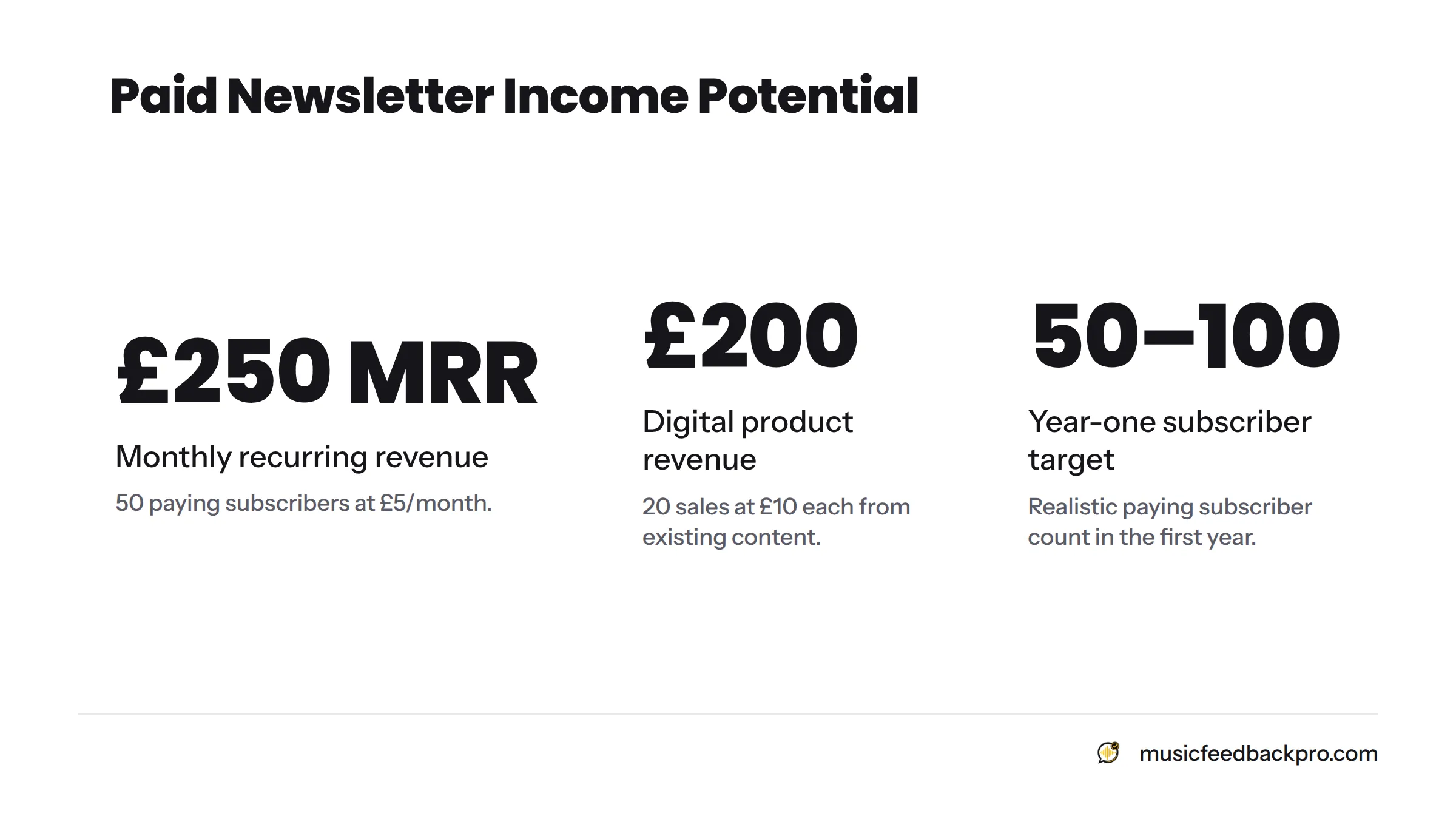
Genre deep-dive guides, music history essay collections, listening notes compiled from years of coverage, music review templates, and annotated playlist PDFs are all products your existing readers might pay for. The bar for viability is low. Twenty sales at £10 each is £200 from content you've already produced.
Paid Newsletter Models for Music Critics
Substack and Ghost both support paid newsletter tiers where subscribers pay monthly or annually for exclusive content. For music critics, the content works best when it's genuinely exclusive: early access reviews, behind-the-scenes album commentary, genre digests unavailable on the free blog.
Build the Free List First
A paid newsletter only converts when you've built a free list first. Start collecting email addresses from day one. Your list is the only audience asset you own outright. Social platforms change their algorithms; your email list doesn't.
Starting from zero paid subscribers is normal. Growth is gradual. A realistic year-one target is 50-100 paying subscribers, which at even a modest monthly rate represents meaningful recurring income.
A paid newsletter turns your taste into a product. Even 50 paying subscribers at £5/month is £250 MRR - more than most music blogs earn from display ads at the same traffic level.
Route 6 - Consulting and Freelance Writing Services
Your blog is a portfolio. Every post you publish demonstrates your ability to analyse, contextualise, and write about music - skills that artists, labels, and PR teams pay for.
What Music Blog Expertise Is Worth to Others
Artists preparing for a release need people who understand how press coverage works and what makes a pitch compelling. Labels need writers who can produce editorial copy. PR firms hire music journalists to ghostwrite client content. All of these are paid engagements, and your blog is the proof of your capability.
Understanding how written critique drives career value - for both artist and critic - is covered in the piece on what a professional music review does for your career.
Services Music Bloggers Can Offer
- Press release writing and EPK (Electronic Press Kit) copywriting
- Music review and critique for labels or A&R teams
- Guest blogging and contributing editorial to larger outlets
- Press strategy consultation for independent artists
- Freelance music journalism for magazines and online publications
Your Blog as Your Portfolio
Every review you publish is a writing sample. Every interview is evidence of access. When approaching clients, link to three or four posts that show range and depth - not just your most recent work.
Setting Rates and Finding Clients
The National Union of Journalists in the UK publishes rate guidance for freelancers - a useful benchmark when setting your own rates. Start slightly below market rate to win your first two or three clients, then raise your rates once you have testimonials. Finding clients comes from networking within the music community, reaching out to PR firms directly, and making your availability clear on your blog's contact page.
Matching Routes to Where Your Blog Actually Is
The most important monetization decision isn't which route to pursue - it's which route to pursue first, given where you are right now.
Audience Size and Starting Routes
| Audience Size | Best Starting Routes |
|---|---|
| Under 500 monthly readers | Route 1 (curator fees), Route 6 (consulting/freelance), Route 5 (paid newsletter if your niche is tight) |
| 500-5,000 monthly readers | Routes 1, 2, 5 - add Route 4 (sponsored posts) once your media kit is ready |
| 5,000+ monthly readers | All six routes are viable; Route 3 (display ads) starts to contribute meaningfully |
The Recommended Sequence for Building from Scratch
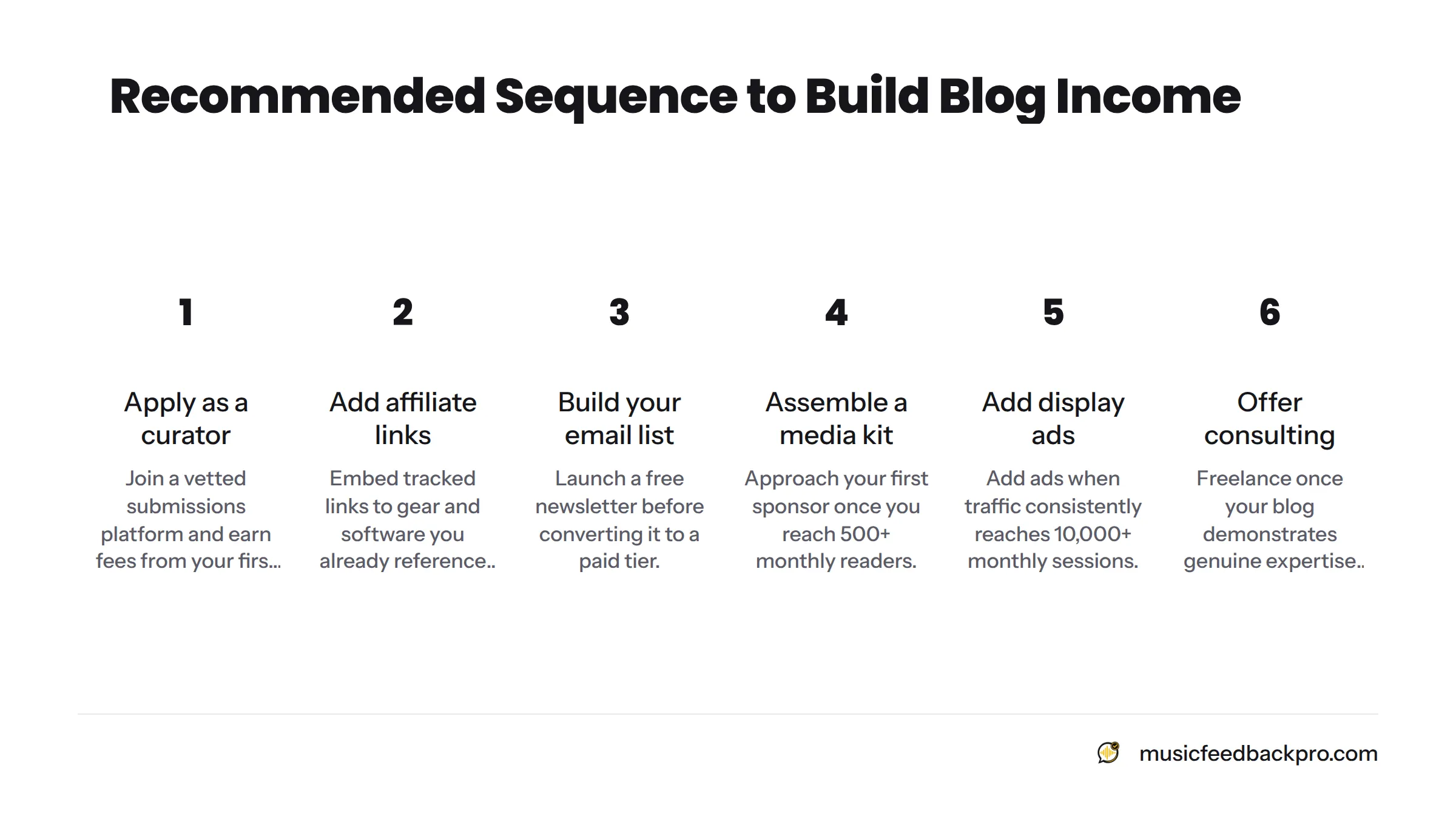
Here's how I'd layer these for a music blogger starting out:
- Apply as a curator on a vetted submissions platform and begin earning fees from your first accepted campaign.
- Add affiliate links to gear and software you already reference in your reviews.
- Build your email list and launch a free newsletter before converting it to a paid tier.
- Assemble a media kit and approach your first sponsor once you've reached 500+ monthly readers.
- Add display ads when your traffic consistently reaches 10,000+ monthly sessions.
- Offer consulting or freelance writing once your blog demonstrates genuine expertise and coverage history.
This sequence means you can earn income from your very first month without waiting for traffic to scale.
The Non-Negotiable: Disclose Everything, Always
Whatever combination of routes you run, disclose every commercial relationship at the top of every relevant post. Editorial independence isn't a nice-to-have. It's the long-term asset that makes every other income route possible. A music blog without trust has no audience. A music blog without an audience has no income. Disclosure isn't the enemy of monetization - it's what makes monetization sustainable.
Ready to add paid reviews to your blog income? Earn fees as a verified curator - apply to Music Feedback Pro's curator network and start receiving paid campaign proposals directly from independent artists.
Frequently Asked Questions
How much can a music blog realistically make per month?
Income varies widely by route and audience size. A blogger using curator fees, affiliate links, and a small paid newsletter can realistically earn £100-£500 per month without a large audience. Display advertising alone at under 5,000 monthly sessions typically earns under £50. Combining multiple routes is the fastest path to meaningful income.
Do I need a large audience to earn curator fees?
No. Curator fees on a vetted submissions platform are negotiated individually between you and the artist. What matters is the quality and consistency of your coverage, not your traffic volume. A focused blog with 200 engaged monthly readers can earn curator fees from its first campaign.
Are paid music reviews ethical?
Yes, when structured correctly. The key is that payment is tied to delivery of the review, not to its content. An escrow model - where funds are held until the review is published - removes any financial incentive to skew your opinion. Full disclosure to readers completes the ethical picture.
What's the difference between a sponsored post and a curator fee?
A sponsored post is commissioned by a brand - typically a gear company or music service - to promote a product or campaign. A curator fee is paid by an artist specifically for a music review, delivered through a structured submissions platform with escrow protection. Sponsored posts are usually negotiated directly with brands; curator fees flow through a platform that manages payment and delivery.
Do I have to disclose paid music features on my blog?
Yes, in every jurisdiction where disclosure laws apply - including the United States (FTC) and the United Kingdom (ASA). Disclosure must appear at the top of the post, be easily visible, and use clear language. Hiding a disclosure in a footer or using vague wording does not satisfy the legal requirement.
Can I monetise a music blog and stay independent?
Yes. Editorial independence and music blog income are compatible when you choose routes that don't compromise your ability to write honestly. Affiliate links, display ads, consulting, and paid newsletters all earn income without requiring endorsement. Curator fees, with proper escrow and disclosure, add a fourth transparent route. The key is never accepting payment that makes an honest negative review financially painful to publish.
This article was written by the Music Feedback Pro curator vetting team, drawing on general effort-to-reward patterns observed across the platform's escrow-based curator fee system.